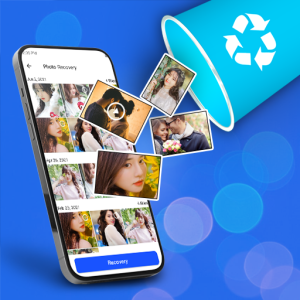
Best Apps for Recovering Lost Photos and Their Limitations
Losing important photos can be devastating. After all, many of them hold irreplaceable memories of special moments. Fortunately, an accident doesn't mean the end of those memories. Technology has evolved a lot in recent years.
Currently, there are several apps for recover photos that were deleted from your phone. These tools work for both Android and iPhone. They may be the solution you need to restore those files that seemed lost forever.
What to expect from the best photo recovery apps
Safety First
Good recovery software operates in read-only mode. This prevents overwriting data and ensures the integrity of your files.
High success rate
These tools use advanced algorithms. Consequently, they greatly increase the chances of successfully restoring your deleted photos.
Ease of use
Most apps have intuitive interfaces. Therefore, you can recover photos with just a few clicks, without needing any technical knowledge.
File preview
Before restoring, you can preview the recoverable photos. This allows you to select only the images that really matter.
System compatibility
There are great recovery apps for both Android and iPhone. This way, you can find a solution regardless of your device.
Powerful recovery features
Deep scan of the device
The best recovery tools perform a thorough scan. They search for traces of deleted photos throughout the internal storage.
Support for multiple formats.
In addition to JPG and PNG, these apps recover other image formats. For example, they can find RAW, HEIC, and other files.
Safe photo restoration
You can save the recovered photos to the cloud. Or, alternatively, to a different location on your device to avoid problems.
Filters and organization
After scanning, organize the results. You can filter by date, size, or file type to make searching easier.
Tips for an effective rescue
Act as quickly as possible.
As soon as you realize the data loss, stop using your phone. This prevents new data from being written over the deleted files.
Use reliable recovery software.
Choose apps with good reviews. Without a doubt, this ensures greater security and efficiency in the process of recovering your photos.
Save the files elsewhere.
When restoring photos, don't save them to the same device. Preferably save them to a computer, an external hard drive, or a cloud service.
Checklist for recovering your deleted photos.
✓
Check the trash can: First, check the "Recently Deleted" folder or the trash bin in your gallery app. Often, the photo is there.
✓
Grant the Permissions: Apps that recover photos need access to storage. Therefore, grant the requested permissions for the scan to work.
✓
Keep the Battery Charged: The scanning process can be lengthy. Next, make sure your phone has enough battery or is plugged into a power outlet.
✓
Be patient: A deep scan can take time. However, do not interrupt the process, as this ensures a more complete result in file recovery.
✓
Check out Cloud Backup: Finally, check your backup in Google Photos or iCloud. Your deleted photo may have been automatically saved before being deleted.

Frequently Asked Questions
❓
Is photo recovery always guaranteed?
Recovery depends on several factors. For example, the time elapsed since deletion and whether new data has been saved in that location. It is not always guaranteed.
❓
Are these photo recovery apps safe?
Yes, recovery apps from trusted sources are safe. In fact, they only read data from your device and do not send your information to third parties.
❓
Does it work to recover deleted photos from a memory card?
Yes, many of these apps can scan and restore photos not only from internal memory, but also from SD cards connected to the device.
❓
Is the quality of the restored photo the same as the original?
Normally, yes. If the file is not corrupted, the recovery software can restore the image to its original resolution and quality.
❓
Do I need to root (Android) or jailbreak (iPhone)?
Some apps offer a deeper scan with root access. However, most work well without this requirement, performing a standard scan.
Criteria that make a difference in the choice
- It works without internet. Editors who process photos on their own device work offline. Those that rely on a server do not—and send your photo externally.
- Resolution of the exported file. Some reduce the image size when exporting without a signature. If the photo is for printing, this is a crucial factor.
- Watermark on the free version. This is the most common trick: the app lets you edit for free, but then stamps the logo on it when you save. Check this before investing your time.
- App weight. Full-featured editors can exceed 300 MB. On devices with limited storage, a lightweight app will handle the basics without crashing.
What these apps don't do
It's important to know what's beyond the reach of this category—that's what avoids frustration and, most importantly, prevents falling for those who promise the impossible.
- They don't remove watermarks from third-party photos. Besides not working properly, using the image without a license is a copyright violation.
- Recovering deleted photos only works on images that haven't been overwritten yet, and the chances of success decrease with each use of the device.
- They don't recover details that don't exist in the file. Increasing the resolution reconstructs pixels by estimation—it doesn't reveal lost information.
- Beauty filters alter the image; they don't alter the person. It's important to remember this when comparing the result to an unedited photo.
Frequently Asked Questions
Will my photos go to the cloud?
It depends on the app. Those that do everything on the device work offline; those that use a server send the image externally.
Is the premium version worth paying for?
It's worthwhile if you edit frequently and need high-resolution export or to remove the watermark. For occasional use, the free version is sufficient.
Is it possible to recover a deleted photo?
If there's a backup in Google Photos or iCloud, yes. Without a backup, only if the space hasn't been overwritten—and that chance drops quickly.
Can I edit without a watermark for free?
Yes, in several applications, but with limited features. Check beforehand by saving a test image.
Is a free editor safe?
Check the permissions requested. A photo editor does not need access to contacts, messages, or microphone.